
Start with the next step you want someone to take
Before choosing a paper or finish, finish this sentence: “After seeing this, I want my customer to…” Call your team? Visit your location? Understand a service? Remember your business after a conversation? That answer gives your print project a useful starting point.
A single piece does not need to tell your entire story. Give it one main job, one clear message, and an easy way to respond.
Match the format to the moment
Business cards: make the introduction last
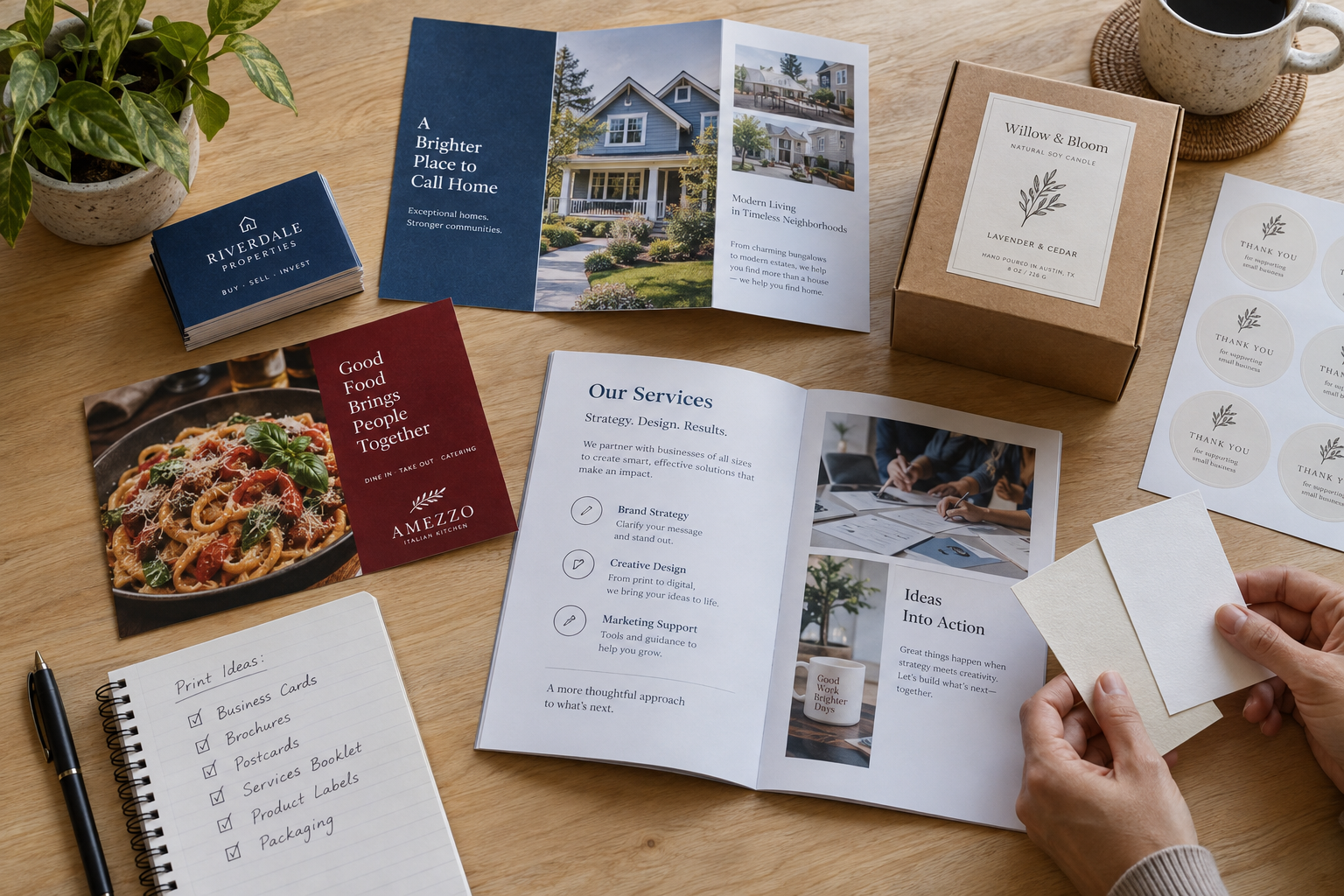
A business card makes sense when you meet people in person, include a contact card with an order, or want customers to keep your details nearby. Make your name, service, and preferred contact method easy to find. Use the back for an appointment reminder, a short service list, or a relevant QR code instead of squeezing everything onto the front.
Brochures: give people room to understand
Choose a brochure when a customer needs more context before deciding. A salon might explain its service groups; a home service company might introduce its process. Plan the reading order around the folds: a clear promise on the cover, useful details inside, and a next step at the end. Explore brochures and other marketing products to find a format that suits your message.
Postcards: put one offer in focus
Postcards work well for an event announcement, a seasonal promotion, or a thank-you tucked into a package. Lead with a specific message and keep the supporting details short. If you plan to mail the piece, confirm the mailing service, address area, and artwork requirements before designing it.
Signs and banners: communicate at a glance
Someone walking or driving past has less time to read than someone holding a brochure. For signs and banners, use a short headline, strong contrast, and a simple layout. Think about viewing distance, installation, and whether the display will be indoors or outdoors when reviewing product options.
Labels and packaging: carry your brand into the purchase
Labels and stickers can identify a product, seal a package, or add a finishing touch. Boxes and packaging give you more space for a coordinated presentation. Check the surface, available dimensions, and intended use before choosing a material. Start with the correct dieline so important information stays clear of folds and cuts.
Build a small, coordinated set
You do not need every format to look established. Start with the pieces your customers will actually encounter. For a local service business, that might be a business card, a service brochure, and a simple sign. For a product business, it might be a label, a package insert, and a box.
Use the same logo, core colors, and type styles across the set, while letting each piece do its own job. A sign needs fewer words than a brochure; a small label needs a different layout than a postcard.
Choose the finish after the design has a purpose
Consider how the piece will be handled and used. Will someone write on it? Will it be kept, handed out, or displayed? Compare the stock and finish choices offered for that specific product, and check any special artwork instructions before adding effects. A finish should support the message and the way the piece is used.
Check these details before placing your order
- Use the correct template. Download the template for your product and size from the NTXPrint template library. Bleed, safety areas, folds, and cut lines can vary by product.
- Review at actual size. Check small text and image quality at the finished dimensions. Keep essential information inside the safe area.
- Test the next step. Scan QR codes from a printed proof and double-check phone numbers, URLs, dates, and spelling.
- Check every panel and page. Confirm the front and back, orientation, fold order, and page sequence where applicable.
- Allow time for production and delivery. Review turnaround times and shipping times separately when planning around an event.
Make your next print project easier to choose
Write down your audience, your main message, and the action you want them to take. Choose one format that fits that moment, then build the artwork around it. If you need help narrowing the options, send NTXPrint a message with your intended use, size, quantity, and deadline.